
NATURAL LIGHT: A KEY ELEMENT OF DESIGN
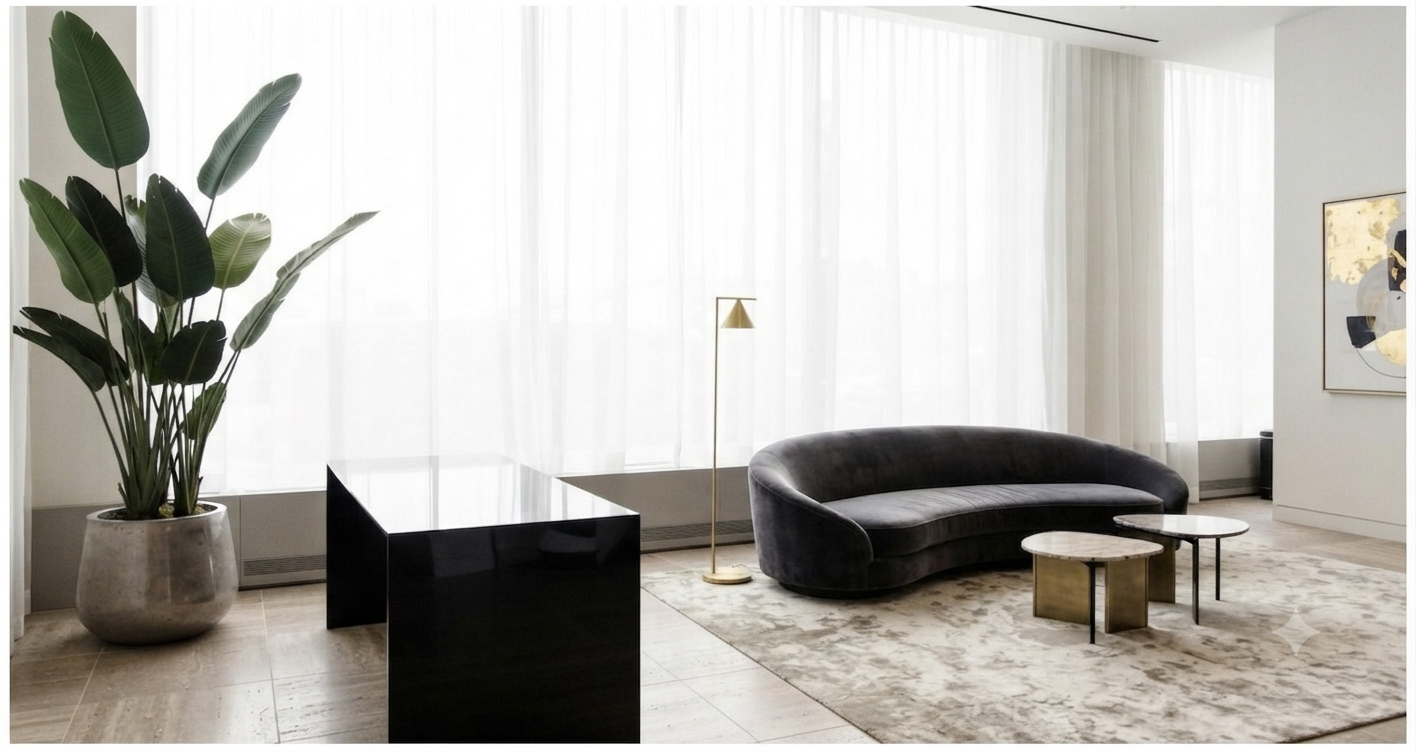
Light is not just a technical detail. It's the element that transforms a space — that brings every interior to life.
Understanding light to decorate better
At every consultation, I observe how the sun moves through the space. How it grazes an east-facing wall in the morning. How it warms another in the afternoon. This understanding helps me place the furniture, choose the tones, and shape the atmosphere.
As a designer, I know that the very same room painted in bright white or off-white will not have the same life depending on its exposure. Harmonising colour and light is an art — almost a science.
Making the most of natural light
I often refuse to conceal natural light. Large picture windows, glass partitions, skylights: these are my allies. They:
- create depth within a space;
- reveal materials — a raw wood floor or a textured wall only speaks under the right light;
- shift the mood over the course of the day, like a living painting.
A kitchen that catches the morning light becomes a place to gather. A west-facing living room turns into a warm refuge in the late afternoon.
Artificial lighting: the intelligent complement
Of course, natural light alone isn't enough. Lighting should be conceived as an element of design in itself: discreet wall lights, statement pendants, indirect light for evening atmospheres.
The goal? For your interior to stay beautiful day and night — authentic and livable.